
IT infrastructure services that come back fast.
Your servers, your storage, and your backups are what the whole operation sits on. The question that matters is the one most teams have never tested: when one of them fails, how fast are you back? We build the systems and the recovery behind them so you come back in hours.
The backup ran fine. But would it restore?
Every morning the backup job reports success. Green check, email sent, on to the next thing. That report tells you the job ran. It does not tell you the server will come back from it, and the only way to know is to try, on a real restore, before the day you need it.
That day tends to arrive without warning. A drive array fails, a server won't boot, ransomware reaches the file shares. The team reaches for the recovery plan and finds out it was a document no one had ever tested. The backup that ran every night turns out to be missing the one system that mattered, or it restores so slowly that four hours of downtime becomes four days. The cost was never the lost hardware. It was the operation sitting idle while everyone waited.
Over two decades of building and recovering systems for operations where downtime is the thing you manage all day means we have run these restores when it counted. We design the servers, the storage, and the recovery so a failure costs you a few hours of work instead of a week you spend explaining.

Four things that decide how fast you recover.
Here is what keeps your systems running, and what gets them back quickly when they don't.

Servers and storage sized to the work.
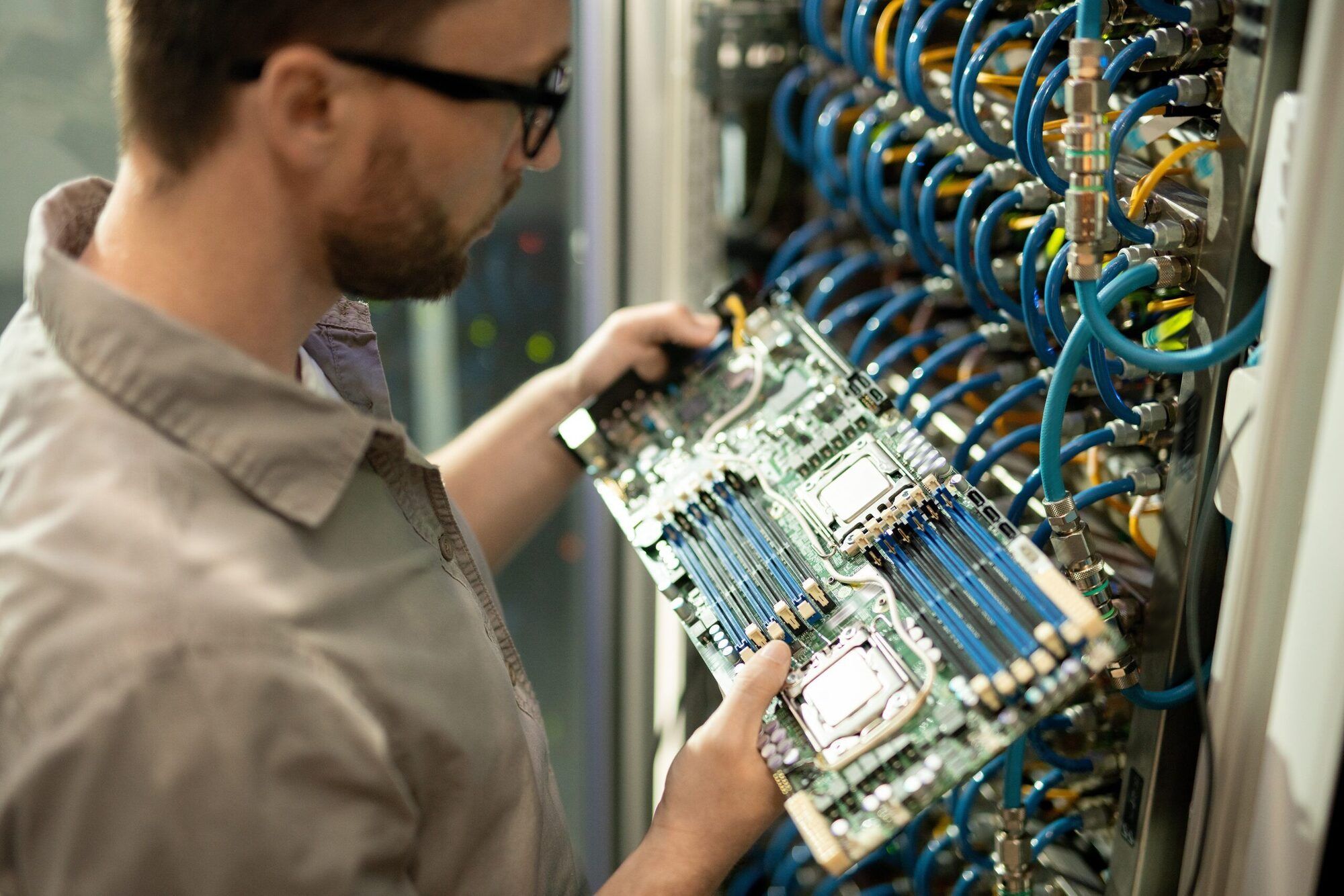
Server infrastructure and enterprise storage sized to the workload your operation runs, with room to grow. We right-size the compute and storage, virtualize with VMware where that makes sense, and keep firmware and patching current through ongoing server management. When the workload can't tolerate slow storage or downtime, we bring in EverPure, our Pure Storage-based enterprise storage, or Nutanix where hyperconverged infrastructure makes the build simpler to run. The result is hardware that earns its place and does not surprise you eighteen months in.

Backups that come back when you call on them.
Backup and disaster recovery built around one question: will it restore? We build it on Veeam for backup and replication, set what gets protected and how often, keep a copy off-site and out of reach of whatever hits the primary, and verify recovery through Overwatch, our monitoring overlay, so a failed or stale backup gets flagged before you need it. A tested restore is the only kind worth having.

A recovery plan with real numbers.
We set recovery targets you can defend: how fast you come back (your RTO) and how much data you can afford to lose (your RPO), tied to what each system is worth to the operation. From there we build to hit them, including disaster recovery as a service for the systems that have to come back first. Business continuity stops being a binder and becomes a plan the team has run.

Someone watching so you hear it first.
Through Overwatch we watch the servers, the storage, and the backup health, and flag a failing drive or a missed backup before it becomes an outage. Patching and server care stay current in the background. You find out from us, with time to act, rather than from a user when the system is already down.
What a recovery plan has to cover, and how we build one.
Most recovery plans fail in the same few places: the targets were never set, the backups were never restored, and the plan was never run. A real plan answers a short list of questions in advance, so the day of an outage is a matter of execution.
What a disaster recovery plan has to cover
What you are protecting, ranked.
Not every system comes back at the same speed. The plan lists what runs the operation, what can wait, and the order they return in.
Your recovery targets.
How fast each system has to be back (RTO) and how much data you can afford to lose (RPO). These two numbers drive every other decision in the plan.
Where the backups live.
A copy off-site or in the cloud, far enough from the primary that one event can't take both. Restored at least once on purpose, so you know the copy works.
Who does what.
The plan names who declares the recovery, who runs it, and who gets told, so nobody is guessing at 2 a.m.
How often it gets tested.
A plan that has never been run is a guess. Real plans get rehearsed on a schedule, and the results change the plan.
How an engagement runs
- 1
Assess
We look at what you'd lose and how fast you need it back, the current backup setup, and when a full restore was last proven to work. You get a findings summary you keep, whether or not the work continues with us.
- 2
Set targets
We work out the RTO and RPO for each system with you, ranked by what the operation can't run without, so the plan matches the business instead of a generic template.
- 3
Build
We put the backup, replication, and recovery in place to hit those targets, including disaster recovery as a service where a system has to come back fast, with an off-site copy out of reach of the primary.
- 4
Test
We run the restore, measure how long it takes against the target, and fix what the test exposes. Then we keep testing on a schedule, because systems change and a plan has to keep up.
We do the work with your team, and we teach as we go.
- We train your team on what we're doing.Your people should come out of every project more capable than they went in. Dependency is not our business model.
- You get direct access to the engineer doing the work.No account manager in the middle. The person you talk to knows your systems.
- We're transparent about what things cost.Hardware, licensing, labor. When a different approach saves you money, we say so.
- We'd rather earn your business than lock it in.Most of our clients have stayed with us more than a decade, by choice.
Built for utilities, municipalities, and the teams that can't afford to stay down.
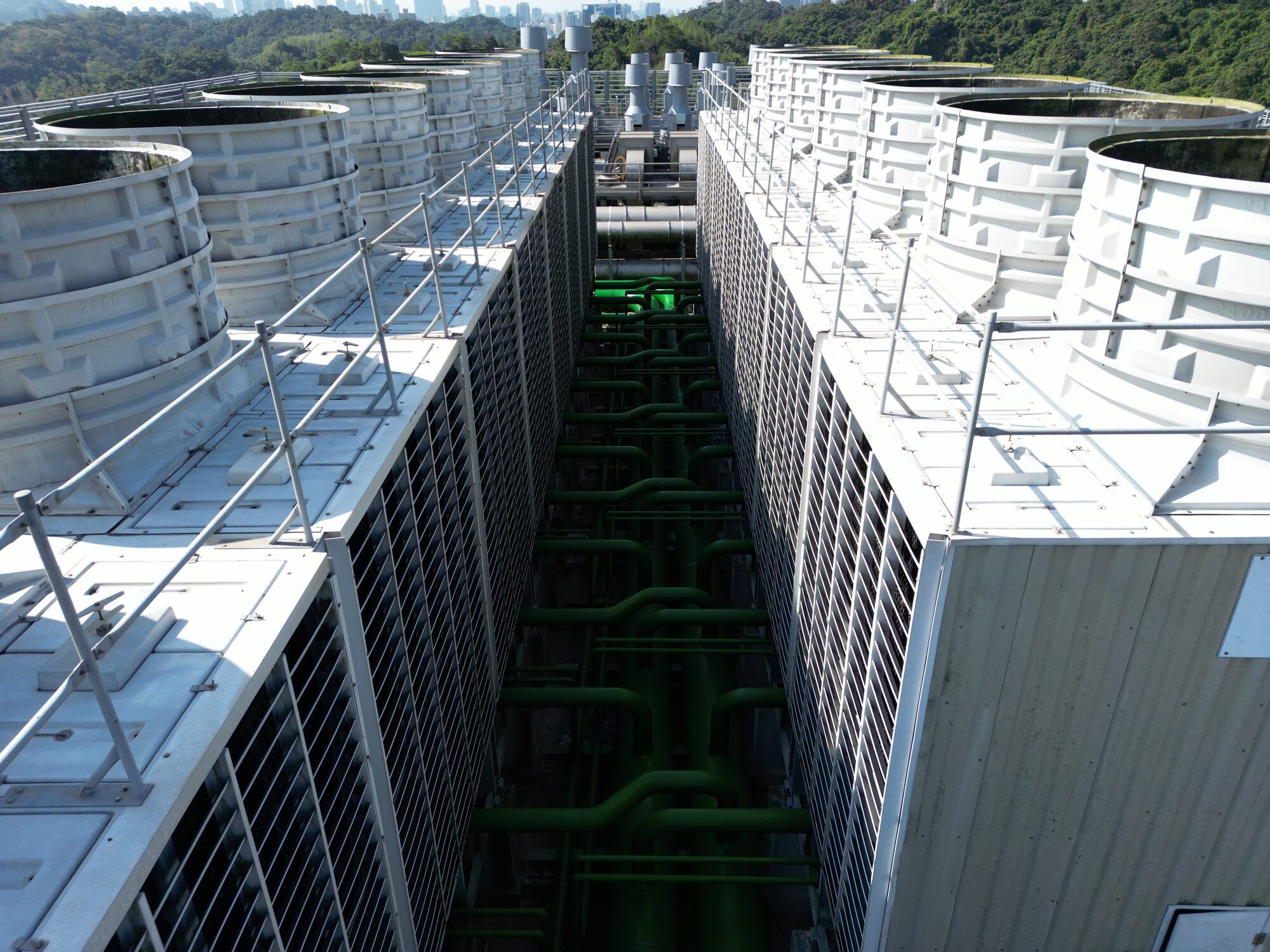
We build and recover systems for the operators communities run on, where an outage reaches the public and downtime is measured in lost service to a community.

Electric utilities and cooperatives.
Servers and storage for billing, SCADA support systems, and operational data, with recovery targets set for sites that can't go quiet. Backups proven by a real restore.
%20--%3e%3cpolygon%20points='34,50%2098,50%2066,24'%20fill='%23C9CCD1'%20stroke='%2333373D'%20stroke-width='4'%20stroke-linejoin='round'/%3e%3crect%20x='30'%20y='50'%20width='72'%20height='9'%20rx='2'%20fill='%23C9CCD1'%20stroke='%2333373D'%20stroke-width='4'%20stroke-linejoin='round'/%3e%3crect%20x='34'%20y='58'%20width='64'%20height='40'%20rx='3'%20fill='%23C9CCD1'%20stroke='%2333373D'%20stroke-width='4'%20stroke-linejoin='round'/%3e%3crect%20x='28'%20y='98'%20width='76'%20height='12'%20rx='2'%20fill='%23C9CCD1'%20stroke='%2333373D'%20stroke-width='4'%20stroke-linejoin='round'/%3e%3c!--%20pediment%20front%20--%3e%3cpolygon%20points='28,44%2092,44%2060,18'%20fill='%23F6F7F9'%20stroke='%2333373D'%20stroke-width='4'%20stroke-linejoin='round'/%3e%3ccircle%20cx='60'%20cy='33'%20r='6'%20fill='%23D9EDF9'%20stroke='%2333373D'%20stroke-width='3'/%3e%3c!--%20building%20body%20front%20--%3e%3crect%20x='28'%20y='52'%20width='64'%20height='40'%20rx='3'%20fill='%23F6F7F9'%20stroke='%2333373D'%20stroke-width='4'%20stroke-linejoin='round'/%3e%3c!--%20columns%20--%3e%3cline%20x1='34'%20y1='56'%20x2='34'%20y2='90'%20stroke='%23616365'%20stroke-width='5'%20stroke-linecap='round'/%3e%3cline%20x1='45'%20y1='56'%20x2='45'%20y2='90'%20stroke='%23616365'%20stroke-width='5'%20stroke-linecap='round'/%3e%3cline%20x1='75'%20y1='56'%20x2='75'%20y2='90'%20stroke='%23616365'%20stroke-width='5'%20stroke-linecap='round'/%3e%3cline%20x1='86'%20y1='56'%20x2='86'%20y2='90'%20stroke='%23616365'%20stroke-width='5'%20stroke-linecap='round'/%3e%3c!--%20door%20--%3e%3cpath%20d='M52%2092%20V66%20Q52%2060%2060%2060%20Q68%2060%2068%2066%20V92%20Z'%20fill='%23007AC9'%20stroke='%2333373D'%20stroke-width='3.5'%20stroke-linejoin='round'/%3e%3c!--%20entablature%20front%20--%3e%3crect%20x='24'%20y='44'%20width='72'%20height='9'%20rx='2'%20fill='%23F6F7F9'%20stroke='%2333373D'%20stroke-width='4'%20stroke-linejoin='round'/%3e%3c!--%20steps%20front%20--%3e%3crect%20x='22'%20y='92'%20width='76'%20height='12'%20rx='2'%20fill='%23F6F7F9'%20stroke='%2333373D'%20stroke-width='4'%20stroke-linejoin='round'/%3e%3c!--%20flag%20--%3e%3cline%20x1='60'%20y1='18'%20x2='60'%20y2='7'%20stroke='%2333373D'%20stroke-width='3.5'%20stroke-linecap='round'/%3e%3cpath%20d='M60%208%20L73%2011%20L60%2014%20Z'%20fill='%23007AC9'%20stroke='%2333373D'%20stroke-width='3'%20stroke-linejoin='round'/%3e%3c/svg%3e)
Municipalities and county governments.
City systems, public safety records, and the data residents depend on, protected on a public budget. Continuity planning that holds up to an audit and a board's questions.
%20--%3e%3cdefs%3e%3cstyle%3e%20.st0%20{%20fill:%20%23f6f7f9;%20stroke-linejoin:%20round;%20stroke-width:%203.5px;%20}%20.st0,%20.st1,%20.st2,%20.st3,%20.st4%20{%20stroke:%20%2333373d;%20}%20.st1%20{%20fill:%20%23d9edf9;%20}%20.st1,%20.st3,%20.st5,%20.st4%20{%20stroke-width:%204px;%20}%20.st2%20{%20stroke-width:%203px;%20}%20.st2,%20.st3,%20.st5%20{%20fill:%20none;%20stroke-linecap:%20round;%20}%20.st5%20{%20stroke:%20%23007ac9;%20}%20.st4%20{%20fill:%20%23c9ccd1;%20}%20%3c/style%3e%3c/defs%3e%3cellipse%20class='st4'%20cx='35.69'%20cy='31.5'%20rx='28'%20ry='22'/%3e%3cline%20class='st3'%20x1='10'%20y1='47.5'%20x2='2'%20y2='93.5'/%3e%3cline%20class='st3'%20x1='50'%20y1='47.5'%20x2='58'%20y2='93.5'/%3e%3cline%20class='st2'%20x1='7'%20y1='65.5'%20x2='54'%20y2='89.5'/%3e%3cline%20class='st2'%20x1='53'%20y1='65.5'%20x2='6'%20y2='89.5'/%3e%3crect%20class='st0'%20x='25'%20y='49.5'%20width='10'%20height='44'%20rx='1'%20ry='1'/%3e%3cellipse%20class='st1'%20cx='30'%20cy='31.5'%20rx='28'%20ry='22'/%3e%3cpath%20class='st5'%20d='M10,32.42c8-5,16,3,24-1,6-3,12,2,16-1'/%3e%3cline%20class='st2'%20x1='18'%20y1='1.5'%20x2='42'%20y2='1.5'/%3e%3cline%20class='st2'%20x1='20'%20y1='1.5'%20x2='20'%20y2='10.5'/%3e%3cline%20class='st2'%20x1='30'%20y1='1.5'%20x2='30'%20y2='9.5'/%3e%3cline%20class='st2'%20x1='40'%20y1='1.5'%20x2='40'%20y2='10.5'/%3e%3c/svg%3e)
Water and wastewater authorities.
Systems and backups for treatment and operations run by small teams with wide footprints, where a recovery has to be simple enough to run shorthanded.

ISPs and telecom providers.
Server and storage infrastructure for provisioning, billing, and customer systems, with recovery built for operations their subscribers count on around the clock.

Manufacturing.
The systems behind production scheduling, historians, and operations, recovered fast enough to keep a line from sitting idle. Backups designed for a plant environment.

Growing enterprises.
Server and storage builds that have outgrown their original design, with the assessment and recovery plan that tell you where you stand and what to fix first.
What teams ask before they call us about backup and recovery.
Not sure your backups would restore when you need them? A review will tell you.
Tell us what your systems run on and what keeps you up at night, and you'll talk it through with an engineer who builds and recovers these systems. If we're not the right fit, we'll tell you who is.